Bamboo, Cubs, and Zero Judgment: The Parenting Secrets Hidden Inside a Panda's Daily Routine
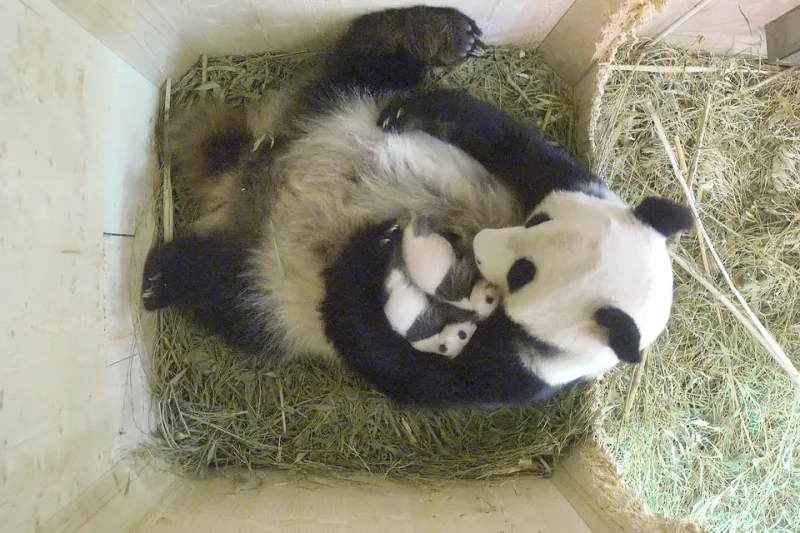
Photo: Martina Heiderer, Carmen Westenberg, Desheng Li, Hemin Zhang, Doris Preininger, Eveline Dungl, CC BY-SA 4.0, via Wikimedia Commons
Let's be honest: most of us have googled "am I doing this parenting thing right" at least once. Maybe at 2 a.m. while a toddler screams about the wrong color cup. Maybe in a Target parking lot after a truly legendary meltdown. The point is, parenting is hard, and we are all just winging it in matching chaos.
But here's a thought — what if the answers weren't in another parenting book or a viral TikTok thread? What if they were tucked inside a bamboo forest in Sichuan Province, China, being demonstrated by a 200-pound bear who somehow looks perpetually unbothered?
Welcome to the surprisingly profound world of panda parenting. Class is in session.
The Art of the Unhurried Introduction
When a giant panda gives birth — and let's acknowledge that panda newborns are basically the size of a stick of butter, which is both miraculous and slightly alarming — the mother doesn't immediately hand the cub a bamboo shoot and say, "Figure it out."
Panda moms are legendarily patient. At the Smithsonian's National Zoo, keepers have observed mother pandas spending weeks in an almost meditative state of closeness with their newborns, cradling them against their chests with a tenderness that routinely breaks the internet. The cub is blind, nearly hairless, and completely helpless. Mom doesn't panic. She just... stays present.
There's a lesson in that for human parents drowning in milestone charts. Not every child learns to walk, talk, or eat solid food on the same schedule. Panda moms don't consult developmental benchmarks. They respond to what's actually in front of them. Radical, right?
Bamboo 101: The Panda Approach to Teaching New Skills
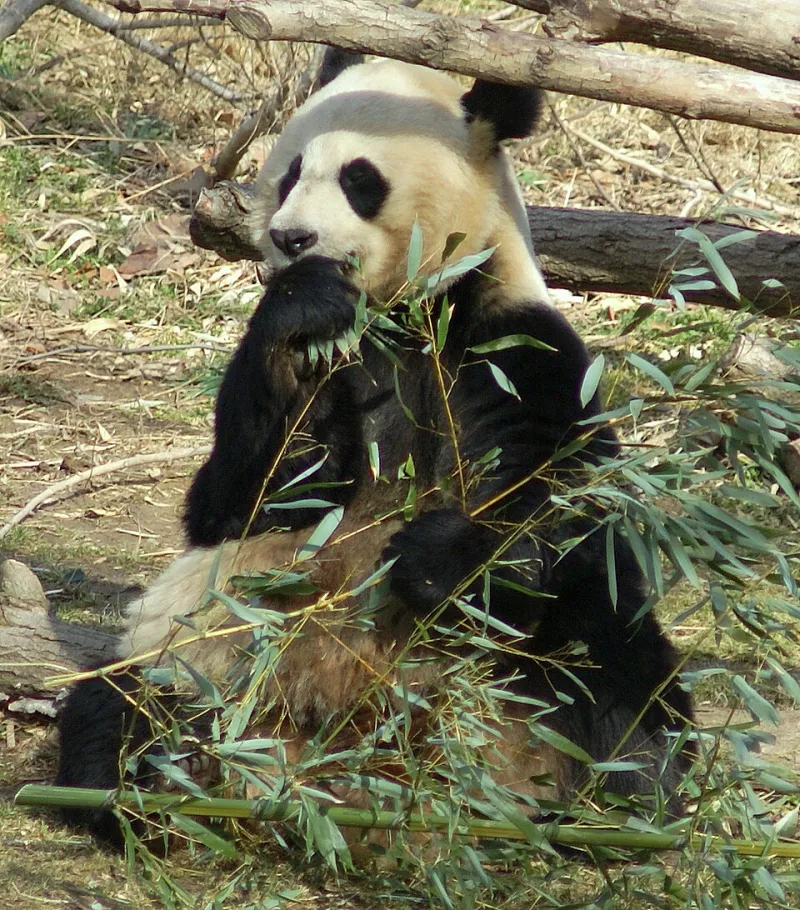
Here's where it gets genuinely fascinating. Baby pandas don't instinctively know how to eat bamboo. It's a learned behavior — one that requires watching, mimicking, and a whole lot of trial and error. Mother pandas are observed letting their cubs watch them eat, allowing the little ones to fumble with stalks on their own terms, and never — not once, as far as researchers can tell — losing their cool about it.
Compare that to the average American household at dinnertime, where a parent is negotiating with a six-year-old over whether a chicken nugget counts as a protein. The panda mom energy we're describing here is "I will model the behavior, I will make space for you to try, and I will not make this a whole thing."
According to wildlife researchers studying pandas at the Chengdu Research Base of Giant Panda Breeding, cubs begin attempting to eat bamboo around six to nine months, but don't really get efficient at it until well past their first year. Mom keeps nursing, keeps modeling, and keeps showing up. No shame spiral. No "why aren't you eating like your cousin."
The Protective Instinct That Doesn't Look Like Hovering
Panda mothers are fiercely protective — don't let the chill vibes fool you. In the wild, a mother panda will carry her cub in her mouth, sleep with it clutched to her chest, and go full defensive mode if any perceived threat enters her space. Zoo keepers have documented mother pandas refusing to leave their cubs even to eat for days at a time after birth.
And yet, as the cubs grow, panda moms gradually increase independence. They don't suddenly cut the cord — it's a slow, natural pulling back. Cubs begin to explore. Mom watches from a respectful distance. She doesn't bubble-wrap the whole bamboo grove.
This is the balance every parenting book tries and fails to perfectly articulate: be present enough to protect, but relaxed enough to let them fall down, eat a bad piece of bamboo, and figure out their own path. Panda moms have been doing this for thousands of years without reading a single parenting blog.
Single Motherhood, Panda Style
Here's a fun fact that hits differently: in the wild, giant panda fathers are essentially absent from cub-rearing. The entire operation — birth, nursing, teaching, protecting, and eventually releasing — falls on mom. And she does it without complaint, without a village, and without access to a single parenting podcast.
Now, we're not suggesting this is the ideal human arrangement (shoutout to all the incredible co-parents and dads out there). But there is something quietly powerful about observing a creature that simply gets on with it. No fanfare. No burnout posts on social media. Just steady, consistent, loving presence.
For the many single parents in the US doing exactly that — raising tiny humans largely on their own — the panda mom is, perhaps, your unexpected spirit animal.
Letting Go Is Also Part of the Job
Panda cubs typically stay with their mothers for 18 months to two years. Then, gently but firmly, they head off into the world. There's no dramatic farewell scene. No panda mom sobbing into a bamboo stalk. The separation is gradual, natural, and — researchers believe — relatively low-drama for both parties.
If you've ever sent a kid off to college and then stood in their empty bedroom wondering who you are now, this part might sting a little. But the panda perspective is instructive: the goal of all that patient teaching, modeling, and protecting was always independence. The letting go isn't the failure of the relationship. It's the whole point.
The Takeaway (Besides That Pandas Are Perfect)
We're not saying ditch your pediatrician in favor of consulting a wildlife documentary. But there's genuine wisdom in the panda parenting playbook: slow down, stay present, model the behavior you want to see, protect without smothering, and trust that the bamboo lesson will eventually click.
Also, maybe stop stressing about the chicken nugget thing. The panda mom wouldn't stress about the chicken nugget thing.
And if all else fails, just remember: panda cubs are born the size of a stick of butter and grow into 200-pound legends. Whatever messy, chaotic, imperfect version of parenting you're doing? You're probably doing better than you think. 🐼