Wanted: One Very Round Fugitive — The Funniest Panda Breakout Attempts Ever Recorded
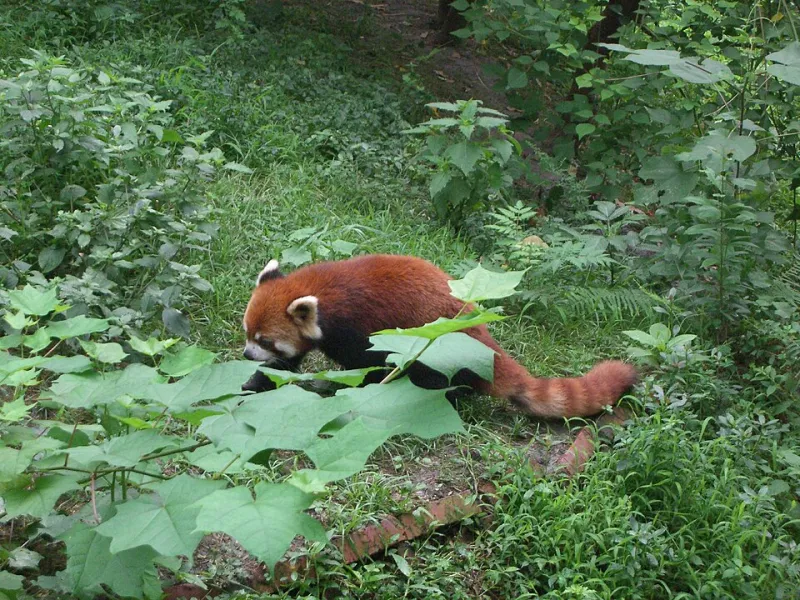
Photo: Alpha from Melbourne, Australia, CC BY-SA 2.0, via Wikimedia Commons
Picture this: It's a quiet Tuesday morning at a major zoo. Staff arrive with fresh bamboo, coffee in hand, ready for another routine day. They approach the panda enclosure and find — nothing. No panda. Just a suspiciously flattened section of fencing, a scuff mark on a wall that shouldn't have scuff marks, and the distant sound of something large and round shuffling through some bushes it absolutely should not be in.
This is not a hypothetical. This has happened. Multiple times. At multiple zoos. And we are here to investigate every single delightful incident.
The Evidence: Pandas Are Way More Resourceful Than They Look
Let's get one thing straight before we dive in: giant pandas weigh between 220 and 330 pounds and spend the majority of their waking hours eating bamboo or sleeping. They do not look like escape artists. They look like sentient stuffed animals who have never had a single agenda in their entire lives.
This is exactly what they want you to think.
The reality is that giant pandas are surprisingly agile, deceptively strong, and apparently possessed of a curiosity that no enclosure has ever fully managed to contain. Zookeepers around the world — from San Diego to Washington, D.C. — have discovered this fact the hard way, often on mornings that started out perfectly normal.
Case File #1: The Climbing Incident Nobody Saw Coming
One of the most beloved recurring plot points in panda escape lore involves climbing. Specifically: pandas climbing things that the enclosure designers were absolutely certain they could not climb.
At the Smithsonian's National Zoo, young pandas have been documented scaling walls, trees, and structures with a confidence that frankly borders on showing off. Tai Shan, born in 2005 and one of D.C.'s most beloved panda celebrities, was notorious for testing the vertical limits of his enclosure as a cub. Keepers would find him in places that required a genuine rethinking of the enclosure's architecture.
The kicker? Pandas are actually excellent climbers. Their pseudo-thumb — that famous extra wrist bone that helps them grip bamboo — also helps them grip walls, branches, and apparently anything else they decide they'd like to scale on a given afternoon. The adorable waddling walk is a red herring. These animals are physically capable of a lot more than their general vibe suggests.
Case File #2: The Great Moat Situation
Many zoo enclosures use moats as a passive deterrent — a water barrier designed to discourage wandering without requiring a hard wall. For most large animals, this works reasonably well. For pandas, it is more of a mild inconvenience.
Pandas, it turns out, can swim. They don't love it. They're not going to join a competitive swim team. But when the alternative is staying on the wrong side of a moat from something interesting, they will absolutely wade through some water and deal with the wet fur situation later.
Multiple zoos have had to redesign moat systems specifically because a panda decided to simply walk through one. Which is, depending on your perspective, either a significant engineering failure or an impressive demonstration of panda determination. We choose to see it as the latter.
Case File #3: The Door That Was Definitely Locked
Perhaps the most humbling category of panda escape involves doors. Specifically: doors that humans were confident were secure, and pandas were equally confident were not.
Pandas have been documented manipulating latches, pushing through improperly secured gates, and exploiting the kind of small structural gaps that enclosure designers assumed no 300-pound animal would bother with. The consensus among keepers who have experienced this firsthand is a mixture of exasperation and genuine respect.
"They notice everything," one keeper at a major US zoo noted in a widely shared interview. "They watch. They remember. And when they decide they want to see what's on the other side of something, they start working on it."
This is not the behavior of an animal that is simply bumbling around. This is problem-solving. This is strategy.
So Where Are They Actually Trying to Go?
This is the question that keeps keepers, researchers, and now Pudgy Pandas readers up at night. When a panda escapes, what is the destination? What is the dream?
The honest scientific answer is: it depends. Young pandas — particularly adolescent males — appear to be driven largely by curiosity and a natural instinct to expand their territory, a behavior that would serve them well in the wild even if it causes considerable chaos in a zoo setting. They're not running from something so much as they're running toward whatever is over there, because over there is new and unexplored and therefore interesting.
Older pandas who attempt escapes often seem to be responding to a specific stimulus — a smell, a sound, a food source detected from a distance. Pandas have an extraordinary sense of smell, and there's evidence that some breakout attempts are essentially very determined grocery runs.
And then there's the boredom theory, which zookeepers take seriously enough that modern panda enclosures are designed with extensive enrichment programs specifically to keep these animals mentally engaged. Puzzle feeders, novel objects, rotating scents, varied terrain — all of it exists because a bored panda is a creative panda, and a creative panda will eventually find a way out of wherever you've put it.
What This Tells Us About Panda Intelligence
Here's the part where we pivot from comedy to something genuinely fascinating: panda escape attempts are actually a pretty compelling argument for panda intelligence.
Giant pandas score high on measures of problem-solving and environmental awareness. They are observational learners — meaning they watch, process, and apply information. A panda who has spent weeks watching keepers use a particular gate latch has been studying that latch. Don't let the bamboo chewing fool you. There's a lot going on behind those eyes.
Conservation researchers have noted that this intelligence is part of what makes panda care so demanding. These aren't passive animals content to exist in a contained space indefinitely. They engage with their environment actively, which is great news for enrichment programs and somewhat stressful news for enclosure security teams.
The Merchandise Angle Nobody Asked For But We're Delivering Anyway
Look, we're Pudgy Pandas. We have to mention it. If you are now deeply invested in the idea of a plush panda wearing a tiny striped escape-artist outfit, you are not alone, and the good news is that the internet has you covered. Search "panda fugitive plush" or "escape artist panda toy" and prepare to spend money you didn't budget for. Zoos across the country also sell panda-themed merch that occasionally leans into the mischievous side of these animals — keychains, shirts, and tote bags that say things like "I survived the great panda breakout of [year]." Collector's items, honestly.
The Verdict
Pandas escape from zoos because they are curious, intelligent, occasionally bored, and in possession of physical capabilities that their fluffy appearance dramatically undersells. They are not malicious. They are not distressed (usually). They are simply pandas, doing what pandas do when they decide the grass — or the bamboo — might be slightly more interesting on the other side of that fence.
And honestly? We respect it. In a world that loves to underestimate them, pandas keep finding new ways to prove that there is a lot more happening inside that round, adorable head than anyone gave them credit for.
Stay sneaky, pandas. We're rooting for you. (Please don't actually escape though. The keepers are tired.)